Why Is My Website Not Ranking on Google? 5 Big Reasons + Real Fixes
Vinayak SP
21/04/2026
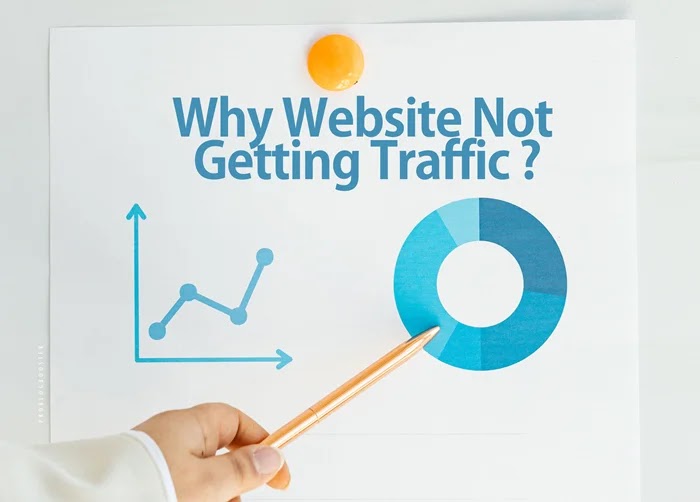
Imagine you spent weeks — maybe months — building your dream website. You picked the perfect color theme, wrote content you were genuinely proud of, and hit "Publish" with a massive smile on your face. Then you opened Google Analytics. And the numbers looked exactly like your bank account after the holiday shopping season — absolutely flat broke. If your website were a store, it would be located somewhere in the middle of the Sahara Desert, with no roads, no signs, and zero customers. Painfully familiar? Well, you are in very good company! Millions of website owners type the same desperate question into Google every single day: why is my website not getting traffic? The truth is — it is not bad luck, it is not Google being mean to you personally, and it is definitely not because your content is terrible. It is because of some very specific, very fixable mistakes. Learning search engine optimization for your blog and website is the single most powerful step you can take right now — and this post is going to show you exactly how.
Reasons for no traffic —
Getting huge traffic to your website is the dream of every blogger, content creator, and online business owner on the planet. For professional bloggers, organic traffic means steady ad income. For eCommerce store owners, it means sales coming in while they sleep like a baby. For personal brands and small businesses, it means people actually knowing that they exist on the internet — which is kind of the whole point! But here is the cold reality that nobody likes to admit: most websites are quietly suffering on page 3, page 4, or page 5 of Google — a digital graveyard where nobody ever goes. Whether you have carefully picked the most profitable blogging niche to make money online or you are simply trying to share your passion with the world, the low website traffic problem hits everyone equally. Even the biggest websites on the internet started from zero visits a day.
So what is the real culprit? Why is Google ignoring your website like that one awkward coworker in the office? Is it your writing? Your design? The fact that you shared your post on your WhatsApp status and just hoped for the best? (We have all done it — no shame.) Here is the truth: there are specific, clear, and completely fixable reasons why your website is not ranking on Google. In this post, we are going through the top 5 biggest ones — with real solutions that actually work — so you can stop guessing and start growing. Keep reading. This one is going to be a game-changer.
Not getting traffic to your website despite publishing great content? You are probably making one or more of these 5 critical SEO mistakes. From wrong keyword targeting and hidden technical errors to a poor mobile experience and zero social media presence, these are the exact problems silently holding your website back from ranking on Google. Read every point carefully and start fixing them today!
Your website is not getting the traffic and rank it deserves — here is why
What actually affects website traffic? Having a poor user experience, no responsive mobile-friendly web design, wrong or non-competitive keywords, being invisible on social media, missing on-page SEO signals, and hidden technical errors — these are the most common and most damaging reasons why your blog or website is not pulling in the organic search traffic you deserve. The good news? Every single one of these is fixable. Here is your complete breakdown.
The top 5 shocking reasons your blog is getting zero traffic — and the proven fixes:
1. Your website is not visible for competitive keywords on Google
One of the top reasons your website is not getting traffic is targeting the wrong keywords. Without solid keyword research, your content is like a billboard hidden in a jungle — nobody can see it. Learning how to pick the right keywords, including powerful long-tail phrases with lower competition, is the very first and most important step to making your website appear on Google's first page and drive consistent, free organic traffic.
If you are reading this and thinking, "even though I have quality content, why my website is still not showing up on Google?" — then it is time to seriously revisit your keyword targeting. This is the number one silent killer of website traffic. You can write the most brilliant, insightful article in the world, but if nobody is searching for the exact words you used, Google has absolutely zero reason to show your page to anyone. Think of keywords as the secret password to get into the Google party. Use the wrong password, and you are standing outside in the rain while everyone else is inside having fun.
When it comes to doing keyword research for SEO, there is a whole world of things to consider — your blog niche, the level of competition around each topic, and the specific words your target readers actually type into Google. One of the biggest mistakes beginner bloggers make is going straight after the biggest, most popular keywords. "Best smartphones." "How to lose weight." "Make money online." These are brutally competitive keywords, and unless your website has the reputation and authority of a Wikipedia or a Forbes, you are in a fight you simply are not ready to win yet. That is why it is so important to deeply understand what keyword research in SEO actually means, its types and importance — before you write your next single word of content.
Here is where the real magic happens — long-tail keywords. Long-tail keywords are longer, more specific search phrases that fewer websites are competing for. They may bring in smaller search volumes individually, but they are far easier to rank for, and the people searching them know exactly what they want. Instead of targeting "TV," try "best 55-inch OLED TV for small apartments under budget." That is a long-tail keyword strategy that delivers targeted readers who are ready to engage. And here is a bonus: a handful of long-tail keywords together can add up to more traffic than one big competitive keyword ever could. The foundation of all of this is understanding why keywords are so important for SEO optimization and how to use research tools to find the right ones for your content.
Do not ignore LSI keywords either — these are Latent Semantic Indexing keywords, which are words and phrases closely related to your main topic. If your post is about "coffee," LSI keywords would include "espresso," "caffeine," "brewing methods," "coffee grinder," and so on. Google uses these related terms to fully understand the context and depth of your page. When you naturally include them in your content, you signal to Google that your post is a rich, thorough resource on that topic — and that earns you better rankings. Start using LSI keywords to boost your on-page SEO for higher rankings and organic traffic today — they are one of the most underused tools in every blogger's toolkit.
One more very important point: with AI-powered search experiences like Google's AI Overviews and Bing's AI search now answering questions directly in the results page, your content needs to be conversational, deep, and clearly structured. Writing in a natural question-and-answer style, covering topics fully, and using phrases like "how to," "what is," and "why does" — these are now essential strategies for staying visible in modern SERP rankings. Stop thinking only about keywords as isolated words. Start thinking about the actual human being sitting at their phone, typing a question into Google, and desperately hoping for a real, helpful answer.
2. Lack of a smart content strategy and internal link optimization
A solid content strategy paired with smart internal linking is one of the most underrated yet powerful moves in SEO. When you connect your related blog posts using relevant internal links, you help Google understand your entire site structure, keep readers exploring your site longer, and boost your overall search rankings. Without this strategy, even the best-written content can sit completely invisible online, bringing in zero organic traffic.
Think about this for a moment. You have written 50 blog posts. Every single one of them is sitting on your website like a lonely island with no bridges connecting them to each other. A reader lands on one post, reads it, and leaves. Google crawls one page and has no idea you have 49 other amazing articles waiting to be discovered. That is exactly what happens when you skip strategic content and internal link optimization — and it is one of the biggest invisible traffic killers in the blogging world. If you want to increase website traffic organically, your content needs to work together as a team, not as strangers at a party.
Internal linking is the practice of adding links inside your blog posts that connect to other relevant pages on your own website. This does two incredibly powerful things at once. First, it helps Google understand how your content is organized — building what SEO experts call a "content cluster" or "topic cluster." Second, and just as importantly, it keeps readers on your website longer, exploring more of what you have to offer. And Google absolutely loves it when visitors stick around. A longer visit time is one of the strongest signals Google uses to judge whether your content is good and worth recommending to more people. Check out these proven content marketing hacks to speed up your blogging growth and learn how to make your content work smarter, not harder.
Here is a simple example: if you wrote a post about "how to start a YouTube channel," you can link inside that post to another article you wrote about "YouTube monetization tips" or "how to grow your subscribers fast." A reader who is passionate about YouTube will naturally click through and read two, three, maybe even five of your posts in one single session. That means more page views, a lower bounce rate, and a longer time on site — all of which are signals that tell Google your website is genuinely valuable. Best of all? You already have the content. You just need to connect the dots with smart links.
Beyond internal links, your entire content strategy for blog traffic matters more than ever. In today's competitive world of content, "write it and they will come" is a fairy tale that stopped being true a long time ago. You need to think carefully about what your readers actually want to know, what problems they are desperately trying to solve, and what content format they prefer most — a detailed step-by-step guide, an entertaining listicle, an honest product review, or a quick FAQ-style post? Content format directly affects how long people read, how much they share, and whether Google sees your post as a perfect match for the searcher's intent. Learn exactly how to write an effective blog post using professional content writing tips that bring in real, consistent readers.
Google also rewards something called E-E-A-T — which stands for Experience, Expertise, Authoritativeness, and Trustworthiness. If your content shows that you genuinely know your topic, uses real examples, includes accurate facts, and is written with honest care for the reader, Google will rank it higher than generic content stuffed with keywords. Write less like a robot filling in a template, and more like a knowledgeable friend giving genuinely helpful advice over a cup of tea. That is the kind of high-quality, people-first content that wins in the search rankings of today — and tomorrow. Want your blog to be something people actually remember and come back to? Do not miss these tips on how to make your blog truly memorable as a brand.
3. Technical errors are quietly stopping your website from getting indexed
Technical SEO errors are silent ranking killers. Problems like crawl errors, broken URLs, slow page loading speeds, unoptimized images, and a poor mobile experience can all stop Google from properly indexing your pages. Even the most brilliantly written content in the world cannot save a website that Google simply cannot crawl and understand. Fixing these technical issues is one of the fastest ways to recover your lost rankings and bring organic traffic flooding back.
This is one of the sneakiest reasons why websites fail to get traffic — and it is one that most bloggers never even think to check. Everything on the surface can look perfectly fine. Your design looks great. Your posts read well. You feel genuinely proud of what you built. But behind the scenes, technical SEO errors are quietly whispering to Google, "Hey, this site has problems — maybe skip it." And Google, being the obedient search engine that it is, listens. Your website's ability to get indexed and ranked depends completely on having zero technical roadblocks standing between your content and the Google crawlers that need to find it.
Even a single technical mistake — a wrong setting in a configuration file, a broken link in the wrong place, a missing redirect — can knock entire sections of your website off Google search results. The good news is that once you know where to look, fixing website crawling and indexing issues is very much doable. Here are the most common technical problems that hold websites back:
3.1. Fix crawling errors on your website
Google uses automated bots called "crawlers" or "spiders" to visit your website, read your pages, and add them to its massive search index. If something blocks those bots, your pages will simply never appear in Google search — no matter how good they are. Here are the things you must check and fix regularly:
Check your robots.txt file — this tiny text file tells Google which pages to crawl and which ones to skip. A single typo in robots.txt can accidentally block your entire website from being indexed.
Check your .htaccess file — a badly configured .htaccess can create infinite redirect loops that will never let your site load properly, sending crawlers away in frustration.
Review your meta tags — a stray "noindex" meta tag hiding on your page can silently tell Google to ignore that page entirely. Always double-check your meta settings.
Keep your XML sitemap updated — an old or broken sitemap makes it harder for Google to discover all your pages. Submit your fresh sitemap regularly through Google Search Console.
Fix URL parameter issues — incorrectly configured URL parameters can accidentally create thousands of duplicate pages that confuse Google and scatter your ranking power across useless copies of the same content.
Stay updated on the latest Google search algorithm updates — every major update can change what Google rewards and what it penalizes, so being informed keeps you one step ahead of ranking drops.
3.2. Fix broken links and messy URLs
SEO-friendly URLs are short, clean, readable, and meaningful — for both humans and search engine bots. Messy URLs filled with random numbers, symbols, and session IDs like "?page=123&session=xyz456&ref=abc" are a nightmare for Google to understand and for users to trust. Broken links and poorly structured URLs destroy your credibility with search engines and directly lead to lower click-through rates and dropping rankings. Every URL on your website should be clean, keyword-rich, and logically structured. And if you ever change a URL, always set up a proper 301 redirect — this tells Google and browsers that your content has simply moved to a new address, not disappeared entirely.
If your website runs on WordPress, the chances of making URL-related mistakes are even higher. From wrong permalink structures to plugin conflicts that corrupt page settings, these errors quietly pile up and tank your rankings without any obvious warning signs. Protect yourself by reading up on the most common WordPress mistakes to avoid and how to fix common WP errors before they do serious damage to your site's rankings.
3.3. Page loading speed — because nobody waits anymore
Page loading speed is both a confirmed Google ranking factor and a make-or-break element for user experience. Research shows that if a website takes more than three seconds to load, more than half of all visitors will abandon it immediately and never return. Slow websites lose traffic, rankings, and conversions all at once. Optimizing page speed through image compression, browser caching, lazy loading, and a reliable hosting provider is one of the smartest and highest-impact SEO moves you can make today.
Let us be completely honest — nobody in today's world waits for a slow website. We are all impatient. If a page does not load in 2 to 3 seconds, most visitors simply hit the back button and click on the next result in Google. That visitor is gone forever. And here is the thing that makes this extra painful — Google knows this too! Page speed optimization is an official, confirmed Google ranking factor. Research consistently shows that a 1-second delay in website loading time causes a significant drop in page views, conversions, and overall traffic. That is not a minor inconvenience — that is your entire audience quietly walking out the door every single day.
Google's Core Web Vitals — which measure Largest Contentful Paint (LCP), Interaction to Next Paint (INP), and Cumulative Layout Shift (CLS) — are now official search ranking signals that every website owner must take seriously. Your site must score well on these metrics to compete in search results. Some fast and effective wins for improving website loading speed include compressing large images before uploading, switching to a faster and more reliable hosting provider, enabling browser caching, minimizing unnecessary JavaScript, and using a CDN (Content Delivery Network). One highly effective but little-known trick is to add fetchpriority in Blogger or WordPress to improve your LCP score and overall SEO performance — it helps Google load your most important content faster, which directly boosts your ranking.
3.4. Images that are not search-friendly
A picture is worth a thousand words. But for Google, a picture with no alt text is worth exactly nothing. Many website designers and bloggers put so much effort into making their images look stunning and beautiful that they completely forget about the SEO impact of image optimization. Here is the thing Google cannot actually "see" your image. It reads the alt text, the file name, the image title, the caption, and the surrounding content to understand what your image is about and whether it is relevant to the page.
Using images with missing or poorly written alt tags, massive uncompressed file sizes, or random generic file names like "IMG_20240315_001.jpg" is a huge missed opportunity. Instead, always name your image files with descriptive, keyword-rich words before uploading them. Write a meaningful alt tag that describes the image and includes your target keyword naturally. Add a clear image title and caption. Compress all your images using free tools like TinyPNG, Squoosh, or ShortPixel — this keeps file sizes tiny without losing visual quality, which also speeds up your page loading time. Dive deep into these actionable image optimization SEO tips using alt text and title tags for better search ranking and traffic — your Google Image Search traffic will thank you!
3.5. Poor mobile experience is silently killing your rankings
Here is a fact that should stop you in your tracks: more than 60% of all internet traffic today comes from mobile devices. More than half! So if your website looks fantastic on a big desktop monitor but turns into a scrambled, unreadable mess on a smartphone screen, you are literally turning away the majority of your potential audience before they even read a single word. And Google? Google has been using mobile-first indexing for years — meaning it primarily judges and ranks the mobile version of your website, not the desktop version. A bad mobile experience does not just lose you readers. It directly tanks your Google ranking.
Your website must use responsive web design — this means your layout, images, fonts, and navigation automatically adjust to look and work perfectly on any screen size, from a tiny 5-inch phone to a wide 4K desktop display. Check your website on multiple real devices. Test your fonts for readability, check that buttons are big enough to tap with a finger, make sure images resize properly, and verify that your navigation menu works smoothly on touchscreens. A website that gives visitors a fast, clean, and enjoyable mobile-friendly experience is one that Google will happily reward with higher rankings and more organic traffic.
4. Not showing up enough on major social media networks
Social media is one of the most powerful free tools available today for driving traffic to your website. Whether it is Facebook, Instagram, LinkedIn, YouTube, Pinterest, or X (Twitter), being consistently active on social media builds your audience, increases brand awareness, and sends a constant stream of real visitors back to your website every single day. Ignoring social media means leaving a massive, free traffic opportunity completely untouched and wasted.
Let us get real for a moment. You could write the most brilliant, life-changing, Pulitzer-worthy blog post ever created. But if it just sits on your website with nobody sharing it, promoting it, or even talking about it — it might as well be written in invisible ink. Social media marketing for website growth is not a bonus strategy anymore. It is one of the most powerful, completely free traffic engines available to every website owner, blogger, and online business on the planet. Nearly 5 billion people across the globe actively use social media. That is your audience — already online, already engaged, and already looking for content exactly like yours.
Think about this: almost every major brand, successful blogger, and online business that enjoys strong search visibility stays consistently active on at least two or three social media platforms. Facebook, Instagram, X (formerly Twitter), YouTube, LinkedIn, Pinterest, Threads, and TikTok — each platform is a place where your potential readers are spending serious chunks of their day. Your job is simple: meet them where they already are, give them something genuinely valuable, and guide them back to your website. It takes consistency more than genius. And as a smart first step, understanding how Facebook shapes your social life and online marketing approach is a great place to start building your social media game.
Here are some powerful real benefits of being active on social media networks:
Social media massively increases your brand exposure, which directly sends more visitors to your website and boosts your overall search visibility and domain authority.
Regularly sharing and engaging with your content on social platforms grows your following and creates a loyal, returning community around your blog or brand.
It builds long-term loyal fans who visit your website again and again — turning one-time casual visitors into die-hard, enthusiastic supporters who share your content for you.
Social media gives you a direct, real-time line of communication with your audience. You can answer their questions, collect their feedback, and understand exactly what kind of content they want from you next.
Every single post, story, reel, or update you share is another opportunity to pull people from social platforms back to your website. Even a simple Instagram story with "link in bio" can drive hundreds of clicks in a single day.
YouTube is an absolutely massive traffic source that most bloggers completely overlook. To learn how to promote your YouTube channel and videos to drive more traffic and views is one of the smartest growth strategies available — video content gets shared, saved, and discovered in ways text posts simply cannot match.
LinkedIn is another powerful traffic source, especially if your blog or business targets professionals, educators, or B2B audiences. You can easily drive LinkedIn traffic to your website or blog simply by publishing useful long-form articles and actively participating in relevant professional communities and groups.
Here is one bonus social media traffic tip that most bloggers completely ignore — Quora. Millions of real people type real questions into Quora every single day, looking for helpful, expert answers. If you take the time to write genuinely helpful answers in your niche — and naturally reference your blog posts where relevant — you create a constant, self-replenishing stream of targeted readers visiting your website. It is one of the most consistently underrated traffic strategies out there. Get these 36 powerful tips for using Quora to drive traffic to your blog and start putting them into action today.
5. Poor user experience is pushing your visitors away
What is the real difference between the world's most successful websites and the ones that struggle to survive in the same space? Design? Budget? Content alone? All of these things matter, but the single biggest differentiator is two small letters: UX — User Experience. Think about the websites you genuinely love visiting. They load quickly. They look clean and organized. They are easy to navigate. The content is easy to read without squinting. You always know exactly where to click next. Now think about websites you closed within 3 seconds — cluttered, confusing, slow to load, or just painfully hard on the eyes. That is the enormous power — and the very real danger — of user experience.
Google pays very close attention to user experience signals. It tracks how long visitors stay on your pages (called "dwell time"), how many pages they visit per session, and how quickly they bounce back to the search results after clicking your link. A website with a great user experience tells Google that visitors are genuinely happy and satisfied — and Google rewards that satisfaction with better rankings and more visibility. Understanding what domain authority is and why it matters for your website's SEO is closely connected to the quality of the user experience you offer — websites that people love to visit naturally attract more backlinks and social shares, which build authority over time.
Key things you can do right now to improve user experience on your website:
Take a hard, honest look at your website design — is it clean, visually appealing, and comfortable to read? Font size, line spacing, color contrast, and your header layout all play a major role in whether a visitor feels at ease on your site or instantly wants to leave.
Make your navigation dead simple and completely intuitive. Your menu structure should be clean and logically organized. Visitors should always know exactly where they are on your site and exactly how to find what they came for — no confusion, no frustration, no mystery tours.
Use relevant, high-quality, well-optimized and royalty-free images throughout your content. Generic, overused stock photos that scream "I grabbed this from Google Images in 5 seconds" damage your credibility instantly. Use meaningful, content-relevant images. Short videos and GIFs can also dramatically increase engagement and time-on-page.
Identify and remove the things that annoy your visitors — autoplay videos with loud audio that start without warning, aggressive pop-ups that cover the entire screen, intrusive cookie banners that refuse to go away, and excessive ads crammed into every corner of the page. Every one of these friction points costs you readers and rankings.
Avoid clutter at all costs. A clean, breathable website layout with enough white space and a clear visual hierarchy will always outperform a messy, cramped one. Keep your homepage and blog pages neat, focused, and easy to skim — this keeps visitors reading longer instead of bouncing away in overwhelm.
Take accessibility seriously — make sure your website can be comfortably used by people with visual, motor, or cognitive disabilities. This includes using strong color contrast ratios, keyboard-navigable menus, descriptive alt text for every image, and readable font sizes. Accessibility is not just the right thing to do — it also sends positive signals to Google.
Use clear and compelling calls-to-action (CTAs) throughout your pages. Guide your visitors every step of the way — "Read this next," "Subscribe for weekly tips," "Check out this complete guide." Websites with clear CTAs keep visitors moving deeper into the content. For fresh ideas on creating content that holds people's attention and keeps them coming back, explore these top creative and viral YouTube channel ideas to make money and grow your online audience.
Here is one last thing to always watch closely: your bounce rate. A high bounce rate — meaning people leave after viewing just one page — is a direct signal to Google that your website is not satisfying its visitors. Work on improving your internal linking so visitors can easily find the next thing to read. Create content that is genuinely engaging and hard to stop reading. Use images, infographics, and short videos to break up text and add visual interest. And always make sure every single page on your website loads fast. The more time visitors willingly spend on your website, the more Google trusts it — and the higher and more consistently it will rank you in the search results.
Frequently Asked Questions About Website Traffic and SEO Ranking
Getting more organic traffic to your website is one of the most asked-about topics in the entire world of blogging and digital marketing. Whether you are a complete beginner just getting started or a more experienced content creator hitting a frustrating plateau, these questions come up again and again. Here are clear, honest answers to the most common questions website owners ask about traffic, rankings, and SEO — explained in the simplest possible way.
Why is my website not getting organic traffic even though I post content regularly?
Posting regularly is great, but frequency alone does not guarantee traffic. The most common reasons include targeting keywords that are too competitive for your current site authority, producing thin or low-quality content that does not fully answer a searcher's question, having unresolved technical SEO errors that prevent Google from indexing your pages, and not promoting your content on social media. You need the right keywords, strong content quality, clean technical health, and consistent promotion — all working together.
How long does it take for a new website to start ranking on Google?
For a brand new website, it typically takes anywhere from 3 to 12 months to start seeing meaningful organic traffic from Google. This period is sometimes called the "Google Sandbox." New websites need time to build trust, earn backlinks, and accumulate indexed pages. The timeline depends on your niche competition level, publishing frequency, content quality, and how actively you build backlinks. Targeting low-competition long-tail keywords from the start dramatically speeds up this process.
What is the difference between organic traffic and paid traffic?
Organic traffic refers to visitors who find your website through unpaid search engine results — they searched a keyword, your page appeared, and they clicked. Paid traffic comes from ads you pay for, like Google Ads or social media ads. Organic traffic is free, sustainable, and compounds over time as your content gains authority. Paid traffic stops the moment you stop spending money. Building organic traffic is a long-term investment that pays off continuously without ongoing ad costs.
How do I find the right keywords to target for my blog or website?
Start with free tools like Google Keyword Planner, Ubersuggest, or Google Search Console to discover what people are actually searching for in your niche. Focus on keywords with a good balance of search volume and low competition — especially long-tail keywords that are more specific. Look at what keywords your competitors rank for using tools like Ahrefs or SEMrush. Also, pay attention to the "People Also Ask" and "Related Searches" sections in Google — these are gold mines for finding exactly what your audience wants.
What are Core Web Vitals and how do they affect my website's SEO?
Core Web Vitals are a set of specific page experience metrics that Google uses as ranking signals. They measure Largest Contentful Paint (LCP) — how fast your main content loads; Interaction to Next Paint (INP) — how quickly your page responds to user clicks; and Cumulative Layout Shift (CLS) — how stable your page layout is while loading. Poor scores on these metrics signal a bad user experience, which can lead to lower rankings. You can check and monitor your Core Web Vitals scores for free in Google Search Console.
Does being active on social media directly improve my Google search ranking?
Social media activity does not directly change your Google ranking as a confirmed ranking signal. However, it has a very strong indirect effect. When you share content on social media, more people see it, visit your website, and share it further. This increased traffic and engagement can lead to more backlinks from other websites, which do directly improve your SEO. Social media also helps build brand awareness and trust, which encourages people to search for your brand by name — another positive signal for Google.
How many internal links should I add to each blog post?
There is no strict magic number, but a good rule of thumb is to include 3 to 5 internal links per post for shorter articles, and 5 to 10 for longer, more comprehensive guides. The most important thing is relevance — every internal link should connect the reader to a related page they would genuinely find useful. Forced or irrelevant internal links confuse readers and can actually hurt the user experience. Focus on natural, helpful links that guide the reader deeper into your content ecosystem.
What is mobile-first indexing and why does it matter for my website?
Mobile-first indexing means Google primarily uses the mobile version of your website to evaluate, index, and rank your content. Since the majority of internet users browse on smartphones, Google shifted to this approach to better reflect real-world user behavior. If your website is not mobile-friendly — if text is too small to read, buttons are too small to tap, or images do not resize properly — Google will rank your site lower. Use Google's free Mobile-Friendly Test tool to check how your site performs on mobile devices.
How can I check and fix technical SEO errors on my website?
The best free starting point is Google Search Console — it shows you crawl errors, indexing issues, Core Web Vitals scores, manual actions, and more. For deeper technical audits, tools like Screaming Frog SEO Spider (free up to 500 URLs), Ahrefs Site Audit, or SEMrush Site Audit can scan your entire website and flag broken links, duplicate content, missing meta tags, redirect chains, slow pages, and other issues. Fix the highest-priority errors first — crawlability issues and broken pages tend to have the biggest immediate impact on traffic and rankings.
What role do backlinks play in getting more website traffic and better rankings?
Backlinks — links from other websites pointing to yours — are one of the strongest ranking signals Google uses. Every quality backlink is essentially a vote of confidence from another website, telling Google that your content is trustworthy and worth ranking. The more high-quality, relevant backlinks your website earns, the more authority it builds — and the higher it ranks for competitive keywords. Focus on earning backlinks by creating genuinely shareable content, guest posting on respected websites in your niche, and building real relationships with other content creators in your space.
Bottom Line — Stop Wondering and Start Fixing
Every single reason covered in this post — wrong keyword targeting, weak content strategy, technical errors, low social media presence, and poor user experience — has one thing in common: they are all fixable. None of these problems require you to be a developer, an SEO genius, or someone with a massive budget. They require awareness, consistency, and the willingness to take action one step at a time. The websites that win on Google are not necessarily the ones with the flashiest design or the biggest teams. They are the ones built by people who understand how to improve website search engine ranking through smart, steady, people-first decisions.
Start by auditing your website today. Check your keyword strategy. Fix your technical errors. Build meaningful internal links between your posts. Show up on social media consistently. And above all, design every page of your website with your reader's experience as the top priority. These are not overnight wins — they are lasting investments in your website's growth. Every improvement you make today compounds into bigger results next month, next quarter, and next year. The bloggers and website owners who stick with it are exactly the ones who eventually see their traffic skyrocket. And there is absolutely no reason that cannot be you.
Now is the time to stop overthinking and start doing. Go through these 5 points one by one. Pick the easiest fix first and build momentum from there. Bookmark this post, come back to it, and track your progress over time. For a complete, step-by-step approach to making your website stronger in search results, explore these proven on-page and off-page SEO marketing techniques to improve your search ranking — because the difference between a website that struggles and one that thrives is not talent. It is simply taking the right actions, one at a time.
Read Online & Share
Scan this QR code with your phone's camera to instantly open the live version of this article.
If you enjoyed this article, please share it with your friends and help us spread the word.
We are a professional review site that operates like any other website on the internet. We value our readers' trust and are confident in the information we provide. The post may contain some affiliate/referral links, and if you make a purchase through them, we receive referral income as a commission. We are unbiased and do not accept fixed marketing articles or fake reviews. We thoroughly test each product and only give high marks to the very best. We are an independent organization and the opinions/views/thoughts expressed here are our own.
Privacy Policy
All of the ProBlogBooster ideas are free for any type of personal or commercial use. All I ask is to keep the footer links intact which provides due credit to its authors. From time to time, we may use visitors/readers, information for distinct & upcoming, unanticipated uses not earlier disclosed in our privacy notice. If collected data or information practices changed or improved at some time in the future, we would post all the policy changes to our website to notify you of these changes, and we will use for these new purposes only data collected from the time of the policy change forward. If you are concerned about how your information is used, you should check back our website policy pages periodically. For more about this just read out; Privacy Policy
Boost your WhatsApp experience by editing sent messages within 15 minutes, and much more like hiding your "last seen" from specific people, and using "view once" for private media. Find out most essential tips including locking your chats with biometrics, using bold/italics texts for formatting, sharing live location, and creating the chat shortcuts for quick access.